Blog
From Cacao Farm to Chocolate Bar: How Chocolate is Actually Made

The Journey Behind Every Bite
Have you ever held a premium chocolate bar and wondered how it was made?
Most people see chocolate as a sweet treat. But behind every bite is a long journey. It starts on a farm and ends in a carefully crafted bar. In India, this journey is becoming more important as people look for premium chocolates with better taste and quality.
Today, more chocolate lovers want to know how is chocolate made India step by step. They want real ingredients, clear sourcing, and honest processes. This is where bean to bar chocolate in Bangalore and across India is changing the game.
Let’s break down the process in a simple way.
Where Cacao Grows – India’s Rising Role
Chocolate begins with cacao. These are seeds from the cacao fruit.
Cacao grows in warm, humid places near the equator. Countries like Ghana and Ecuador are famous. But India is now becoming a strong player.
Why India Matters in Cacao Production
- India is the largest cacao producer in Asia
- Grown mainly in:
- Kerala
- Karnataka
- Tamil Nadu
- Often grown alongside coconut and areca nut farms
Indian cacao has a unique taste. It can be fruity, nutty, or slightly spicy. This gives Indian chocolate a special identity.
This is one reason why premium chocolates in Bangalore are gaining attention. They use local cacao and control the process closely.
Harvesting and Fermentation – Where Flavor Begins
Once cacao pods are ripe, farmers harvest them by hand.
Inside each pod are white pulp-covered beans. These beans do not taste like chocolate yet. The magic starts with fermentation.
Step-by-Step: Harvesting and Fermentation
- Pods are cut from trees
- Beans are removed
- Beans are placed in boxes or banana leaves
- They ferment for 5-7 days
Why Fermentation Matters
Fermentation builds flavor.
- It removes bitterness
- It develops chocolate aroma
- It adds fruity or floral notes
Without this step, chocolate would taste flat and dull.
This is where true premium chocolate bar quality begins. Good brands carefully manage fermentation to get consistent flavor.
Roasting and Cracking – Unlocking Taste
After fermentation, beans are dried and sent to chocolate makers.
Next comes roasting.
What Happens During Roasting?
- Beans are heated at controlled temperatures
- Time and temperature depend on the desired taste
Roasting helps:
- Enhance chocolate flavor
- Reduce moisture
- Make shells easier to remove
Cracking and Winnowing
After roasting:
- Beans are cracked open
- Outer shells are removed
- Inner part (called nibs) is collected
These nibs are pure cacao. They are the base of all chocolate.
Different roasting styles create different flavours:
- Light roast → fruity, acidic
- Medium roast → balanced
- Dark roast → bold, bitter
This is why chocolates can taste so different, even with the same ingredients.
Grinding, Conching, and Tempering – The Craft Stage
This is where chocolate becomes smooth and rich.
Grinding
Cacao nibs are ground into a paste called cocoa mass.
- Heat from grinding melts cocoa butter
- The result is a thick liquid
At this stage, ingredients like sugar or milk may be added.
For example:
- Dark chocolate dried fruits bars may include dried berries
- Dark chocolate with fruit and nut may add almonds or raisins
Conching
Conching is a long mixing process.
- Chocolate is stirred for hours (sometimes days)
- It becomes smoother
- Unwanted flavors are removed
Good conching gives chocolate:
- Creamy texture
- Balanced taste
- Clean finish
Premium brands take more time here. This is why premium chocolates feel smoother.
Tempering
Tempering controls temperature carefully.
It helps:
- Chocolate shine
- Snap cleanly when broken
- Melt evenly in the mouth
Without tempering, chocolate can look dull or feel grainy.
Moulding and Finishing – The Final Chocolate Bar
Now the chocolate is ready to become a bar.
Final Steps
- Chocolate is poured into moulds
- Air bubbles are removed
- It is cooled and set
- Bars are removed and packed
At this stage, creativity comes in.
You may see:
- Plain dark bars
- Dark chocolate with fruit and nut
- Infused flavors like orange, coffee, or spices
This is also where Bangalore special chocolate makers experiment with local ingredients.
How Modello Does It in Bengaluru
In a growing market of famous chocolate shops in Bangalore, quality matters more than ever.
Modello focuses on the bean-to-bar approach.
What Makes Modello Different
- Direct sourcing of cacao from Indian farms
- Small-batch production for better control
- Focus on clean ingredients
- Careful roasting and conching
This approach ensures:
- Better flavor clarity
- Transparency in sourcing
- Consistent quality
Unlike mass-produced chocolates, bean-to-bar makers like Modello control every step.
This is why many chocolate lovers searching for premium chocolates in Bangalore are turning to craft brands.
When you try a Modello bar, you are tasting the full journey-from farm to final product.
Why Bean-to-Bar Chocolate Matters
Here’s a simple explanation for readers:
What is Bean-to-Bar Chocolate?
Bean-to-bar means the chocolate maker controls every step:
- Sourcing cacao
- Roasting
- Grinding
- Final production
Why It’s Better
- More transparency
- Higher quality
- Unique flavors
- Supports farmers
This is the future of premium chocolate bar production in India.
Experience Real Chocolate
Now that you know how is chocolate made India step by step, your next chocolate experience will feel different.
Instead of just sweetness, you will notice:
- Flavor layers
- Texture
- Aroma
If you’re exploring Bangalore special chocolate, start with a brand that values craft and quality.
Try a carefully made bar from Modello and experience what real chocolate should taste like.
FAQs: How Chocolate is Made (India Focus)
-
How is chocolate made in India step by step?
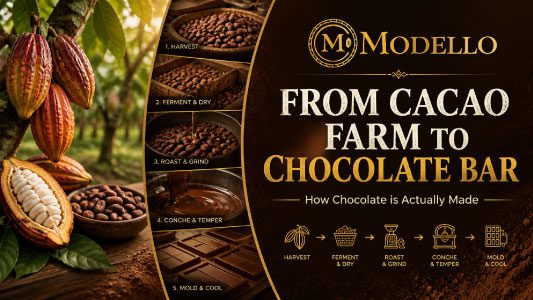
Chocolate is made by:
- Growing cacao
- Harvesting pods
- Fermenting beans
- Drying and roasting
- Grinding into cocoa mass
- Conching and tempering
- Moulding into bars
-
What is bean to bar chocolate in Bangalore?
Bean-to-bar chocolate means the maker controls the full process-from cacao sourcing to final bar production. Many premium chocolates in Bangalore follow this method.
-
Why does fermentation matter in chocolate making?
Fermentation develops flavor. It removes bitterness and creates the base chocolate taste. Without it, chocolate would taste flat.
-
What makes a premium chocolate bar different?
A premium chocolate bar uses:
- High-quality cacao
- Better processing methods
- Less additives
- More attention to flavor
-
Is India good for cacao production?
Yes. India is the largest cacao producer in Asia. Regions like Karnataka and Kerala produce high-quality beans used in premium chocolates.
-
What are popular types of chocolate in Bangalore?
Popular options include:
- Dark chocolate
- Dark chocolate dried fruits
- Dark chocolate with fruit and nut
- Single-origin bars
-
Where can I find famous chocolate shops in Bangalore?
Bangalore has a growing craft chocolate scene. Many famous chocolate shops in Bangalore now offer bean-to-bar products and unique flavors.
Chocolate is more than a treat. It is a craft.
From cacao farms in India to carefully made bars in Bangalore, every step matters. The more you understand the process, the more you enjoy each bite.
And once you taste true bean-to-bar chocolate, there’s no going back.